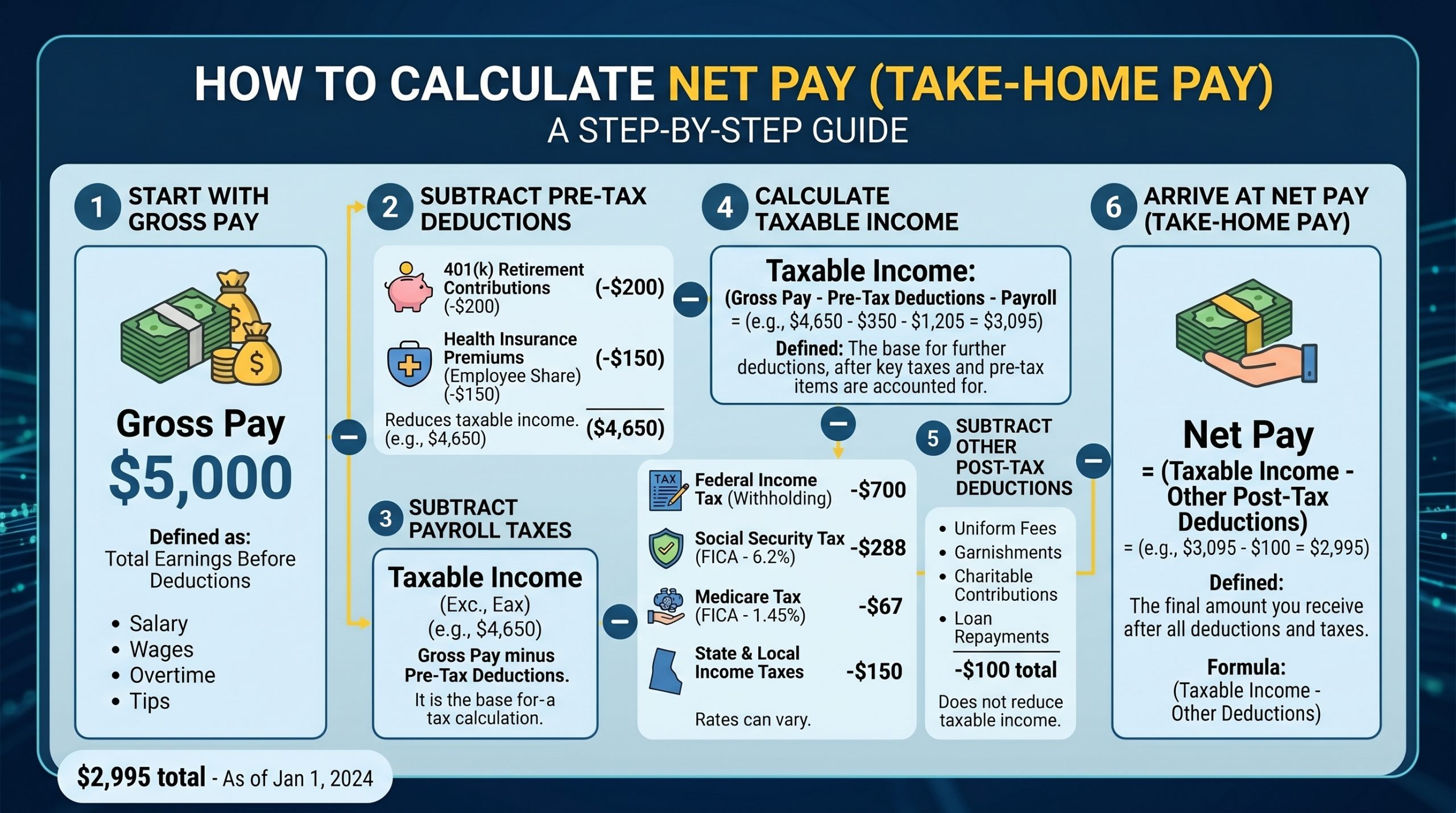

To calculate net pay when working for a remote foreign employer, you must subtract four specific hidden leaks from your gross foreign currency offer: regional tax residency liabilities, independent contractor operational overhead, cross-border payment platform conversion spreads, and local statutory compliance deductions. You cannot simply apply a standard local tax table to your international invoice value and expect an accurate figure.
Landing an international remote job or freelance contract is highly lucrative, but calculating your actual take-home income requires a precise sequence. Below is an SEO-optimized, publication-ready guide designed to target the high-intent keywords "How to calculate net pay for remote foreign employers" and "calculate net pay" to ensure your platform drives targeted organic search traffic.
Securing an international remote contract that pays in strong currencies like USD, GBP, or EUR is a massive career milestone. However, many independent professionals make the costly mistake of assuming their gross contract amount matches what will land in their local bank account.
If you do not accurately calculate net pay before signing an agreement, you risk losing up to 30% or more of your gross earnings to hidden cross-border fees, progressive tax bands, and compliance overhead.
Whether you are working as an independent digital specialist or evaluating an absolute career pivot via the entrepreneur vs employee income potential metrics, here is the exact operational framework you need to accurately forecast your disposable income.
1. Deduct International Payment Processing and Conversion Spreads
The very first financial leak occurs before the money ever touches your home country. Foreign employers rarely send international wire transfers directly to local bank accounts due to high correspondent banking fees. Instead, they use digital wallets or global payroll platforms.
When you use automated tools to evaluate cross-border income, like the global remote jobs hub converter, you must factor in the following inbound deductions:
- Platform Receiving Fees: Payment networks (such as Payoneer, Wise, or PayPal) charge flat fees or percentages (ranging from 1% to 3.5%) just to accept international corporate disbursements.
- Foreign Exchange (FX) Spreads: This is where most remote workers lose the most money. Standard platforms do not convert money at the mid-market rate you see on Google. They add an FX markup spread.
- Official vs. Parallel Market Values: In several developing economies, local tax compliance dictates that you must account for your foreign earnings using official central bank rates rather than local parallel market variations.
2. Separate Contractor Expenses from Chargeable Profit
If your remote foreign employer does not have a legal business entity registered in your country, they cannot legally hire you as a traditional salaried employee. Instead, they will onboard you as an Independent Contractor.
As a contractor, your gross incoming revenue is not your taxable baseline. To accurately calculate net pay, you must first deduct your legitimate business operational costs.
1. List Allowable Business Deductions:
Monthly Maintenance.
Track all direct operational overhead required to execute your job. This includes high-speed alternative internet subscriptions, dedicated co-working space fees, power backup generation, and software licensing costs.
2. Calculate Your Net Net Business Profit:
Subtracting Overhead.
Subtract your total operational expenses from your gross incoming converted currency. The remaining balance is your true business profit—this is the exact figure subject to personal income tax.
3. Apply Legal Statutory Reliefs:
Tax Optimization.
Deduct your local personal reliefs, consolidated allowances, and voluntary pension contributions allowed under your home country's current fiscal frameworks to shrink your taxable pool.
3. Apply Local Progressive Income Tax Tables
A fundamental law of international remote work is: Where you physically sit is where you owe your income tax. Your foreign employer's home country will generally not tax your remote earnings, but you are legally required to self-declare and pay taxes to your local revenue authority.
To effectively calculate net pay, you must process your net business profit through progressive statutory tax brackets. For instance, you can run detailed salary analyses using a dedicated Nigeria salary tax calculator or a Nigeria PAYE tax net salary calculator to observe how your tax liability scales across higher revenue brackets.
Critical Warning: Never assume your foreign employer is handling your local tax filings. Unless they are utilizing a specialized localized Employer of Record (EOR) service, you are entirely responsible for filing annual self-assessment returns.
4. Calibrate Income Against Your Real Cost of Living
Once you have subtracted transaction costs, operational business expenses, and local tax liabilities, you arrive at your final net take-home pay. However, the absolute value of that net amount depends heavily on your local purchasing power.
Before finalized contract execution, run these targeted evaluations:
- Inflation Balancing: Use a comprehensive Nigeria cost of living vs salary calculator to measure how your foreign net pay holds up against current domestic food, housing, and utility inflation metrics.
- Market Benchmarking: Cross-reference your global remote offers with baseline internal benchmarks via a Nigeria salary expectation calculator to ensure you are not underpricing your technical skills.
- Startup Allocation: If you intend to save a portion of your remote contract net pay to launch a localized enterprise, calculate your required corporate runway using a specialized business startup cost estimator.
5. Transitioning smoothly into Verified Global Frameworks
If you are currently processing applications across highly active international fields—such as specialized digital marketing jobs remote, data extraction via a data analyst intelligence tool, or modern automated intelligence careers—you need a polished administrative system to back your high-earning potential.
Solidify Your Onboarding Assets
When pitching yourself as a high-value independent contractor to foreign companies, ensure your primary promotional materials pass initial automated corporate barriers. Access a vetted job search resources CV hub and download an ATS compliant resume template to prevent your application from being dropped prematurely by algorithmic screening tools. Reviewing the technical reasons why your CV is getting rejected will significantly boost your overall job application success rate calculator ratios.
Seal Contracts Professionally
To make foreign business owners completely comfortable sending payouts to your local jurisdiction, present them with an airtight service framework. You can adapt a standardized remote developer contract template to map out your terms, or study the step-by-step mechanics of executing long-term agreements by using a dedicated tutorial on how to draft a contract for freelance work.
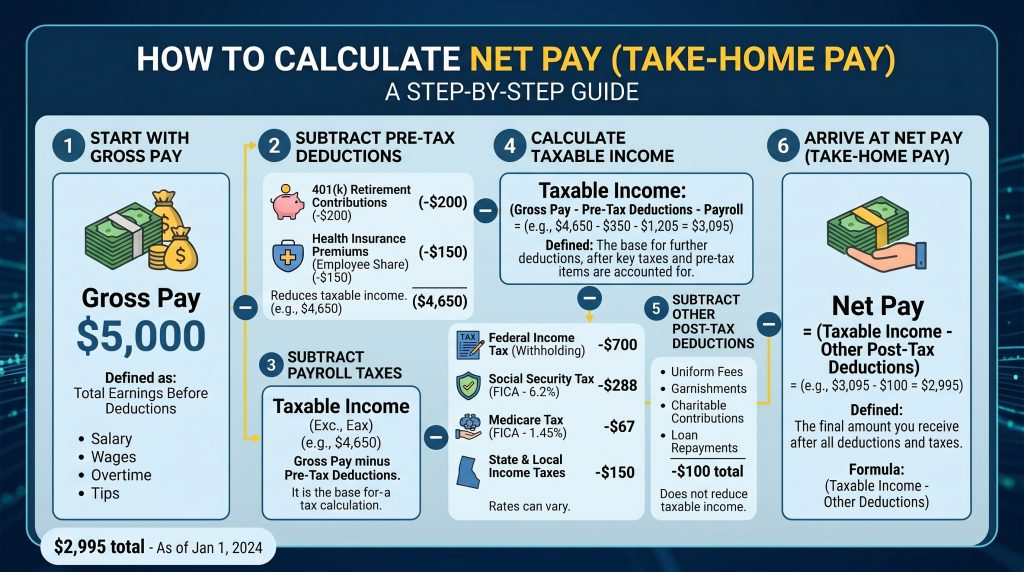
Summary Checklist to Calculate Your Exact Net Pay
- Gross Foreign Value: Determine the baseline annual foreign currency offer (e.g., $45,000 USD).
- Subtract Platform Drops: Deduct a baseline of 2% for transaction handling and conversion spreads.
- Remove Operational Costs: Deduct annual data, power, and equipment amortizations to isolate true profit.
- Compute Progressive Tax: Pass your final profit baseline through local income tax bands to extract your absolute net take-home balance.